
The Fog Journal — Entering the Landscape
The land does not ask merely to be looked at — it asks to be entered.

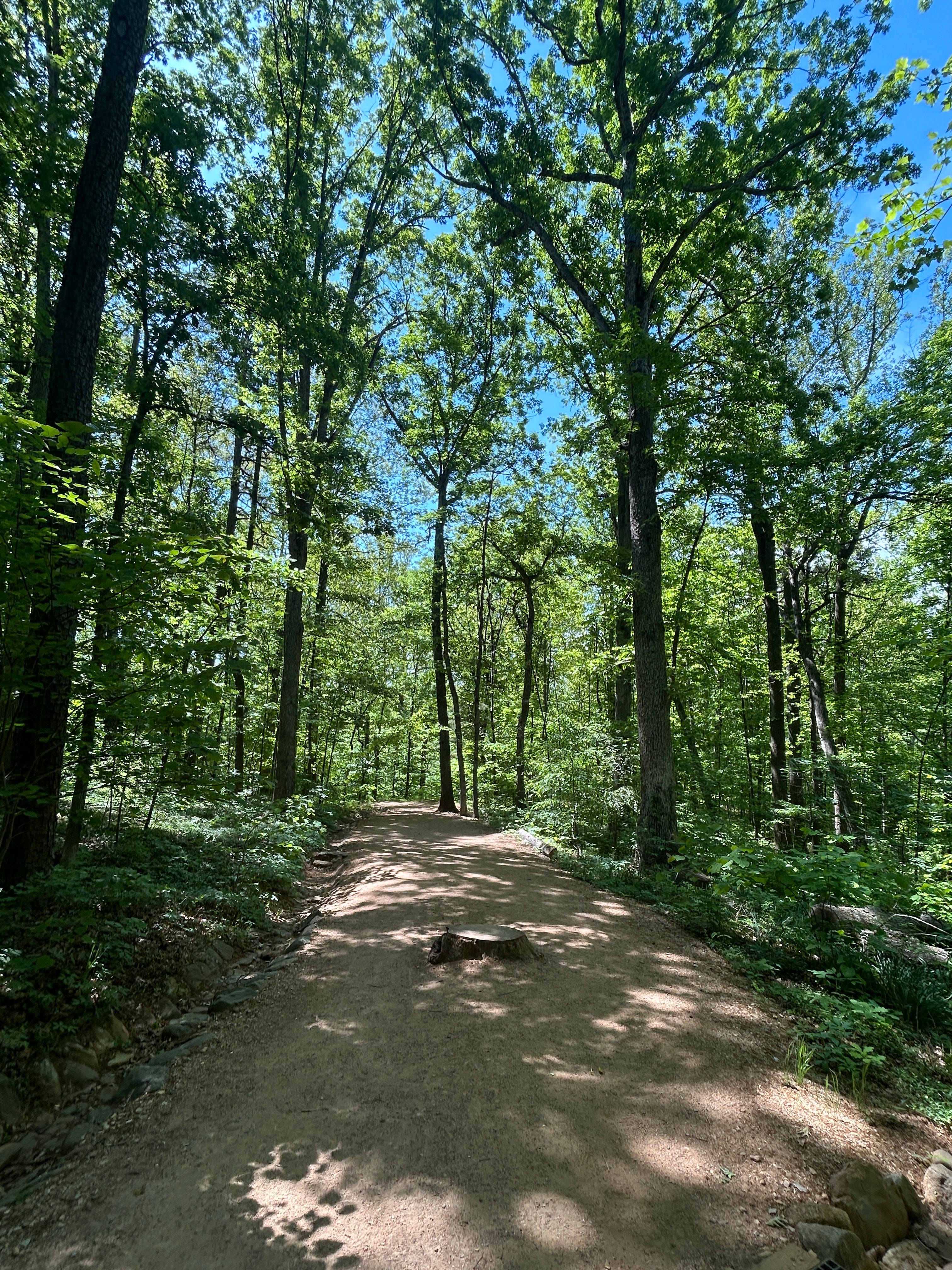
I’ve noticed something lately while walking.
Not about the woods themselves, but about the way I’ve been moving through them.
For a long time, I think I treated the natural world as something to observe. A place to stand beside and interpret. I would go into the mountains, the fields, the shoreline, and return carrying reflections like pressed leaves between pages — small truths gathered from a distance.
There is value in that.
But lately, it has begun to feel incomplete.
The land does not ask merely to be looked at.
It asks to be entered.
There is a difference between admiring rain through a window and standing beneath it long enough to feel your thinking change. A difference between photographing a trail and trekking far enough that the rhythm of your own mind begins to shift with the terrain. A difference between recognizing beauty and participating in it.
I think I have spent too much time trying to describe the world without fully allowing myself to belong to it.
Perhaps many of us do this now.
We document sunsets instead of watching them disappear. We collect experiences without inhabiting them fully. Even our moments of stillness become framed, captured, and preemptively translated into something shareable before they are truly lived.
And slowly, without meaning to, we begin standing outside our own lives.
The natural world resists this dissonance.
The woods do not care about perception. The ocean does not pause for interpretation. Marshland, mountain fog, summer cicadas — all of it continues whether we narrate it or not. To enter these places honestly requires something more difficult than observation…
Presence.
Not as an idea, but as surrender.
To walk without trying to extract meaning immediately.
To sit without needing revelation.
To let a place work on you before deciding what it means.
I’ve begun to realize that some of the moments which stay with me most are not the ones I understood right away. They are the ones I entered deeply enough that they continued unfolding afterward.
A roadside stand in the valley.
The smell of salt air before the ocean comes into view.
The silence that settles after rain.
The sound of tires crossing gravel at dusk somewhere in the Blue Ridge.
These are not symbols first.
They are experiences.
And perhaps meaning arrives precisely because they were lived fully before they were examined.
I don’t think the answer is to stop reflecting. Reflection is part of the work. But I do think I want to move differently moving forward — less concerned with standing outside the landscape describing it, and more willing to disappear into it for a while.
To let Virginia speak in its own accent.
To let weather remain weather.
To let trails, rivers, mountain towns, diners, marshes, overlooks, and coastlines become more than settings for thought.
Not every place exists to teach us something.
Some places exist simply to be entered honestly.
And perhaps that honesty is what changes us.
The work continues…
And in the miles ahead, I hope to spend less time observing the landscape and more time allowing it to remake the shape of my attention.
—MM